Removing seat hinge bolts from one-piece toilet

Jakedeg

New Member
Messages
9
Reaction score
0
Points
1
Location
New York City
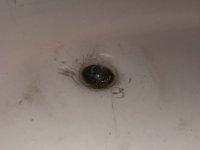
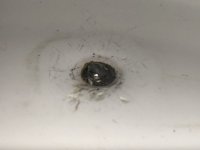
I am trying to replace the seat of my one-piece Kohler toilet. I have purchased the PART 84999 TOILET SEAT ANCHOR KIT but removing the old bolts from my previous seat is proving to be very challenging. I used some pliers to try to unscrew them, but just ended up snapping off the heads. Now, I'm left with the shaft of the bolt in the holes in the toilet, and surrounded by some pretty solid gunk. I don't know what it is, but it looks to me like whoever installed this seat originally coated the threads with something nasty to get them to stick and not wobble, and it is sure holding them firm.

Photos:
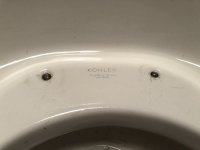
Photo Sep 18, 6 51 44 PM.jpg Photo Sep 18, 6 51 54 PM.jpg Photo Sep 18, 6 52 10 PM.jpg Photo Sep 18, 6 52 22 PM.jpg

Any ideas? How do I get these things out? Or in?
 
Do you have access from inside the tank?
No. As far as I can tell, there is no access to the inside whatsoever. The instructions from Kohler are basically to punch the old anchors into the one-piece body of the toilet and forget about them.
 
You could try drilling them out. Do you know how to do that? You start with a small sharp bit and work your way larger.

Maybe the toilet would survive punching them out, but drilling would seem more likely to not hurt the base.
 
Thanks. I can try that. Not sure if I have a sharp enough bit. When I tried it a little bit, the bit kept slipping off the bolt and making a mess. But I can keep at it.
 
Maybe get some 1/16 inch bits to start and a center punch.
 
I had a similar situation and carefully using some diagonal cutters and a sharp knife was able to nip away at some of the wide part of the rubber and eventually was able to punch them out without worrying about cracking anything. THere's a rubber sleeve over two metal sections that get pulled towards each other as you tighten the screw that cause the rubber to expand and lock it in the hole. Drilling is often problematic as the actual hold in the hole may not offer enough friction which may cause the whole thing to turn. A center punch is worth a shot...you don't want the drill bit skating and potentially damaging the glaze. If you can get a drill to work, you might try screw extractor - note, some brands have a drill bit on one end and the extractor on the other, which makes getting the right sized and shape hole reliable.
 
Hmm. Whatever it is that is coating these bolts and keeping them in place is not rubber. It's rock solid. And the replacement anchors I got from Kohler don't have any rubber bits either. I worry that these are so firmly locked in place that a screw extractor won't have much success. I'm going to try to get some better drill bits and keep working to drill out the bolts.
 
Did it! Just had to keep drilling it out. It looks to me like the person who originally installed it didn’t understand how it was supposed to work and didn’t use the anchors at all and just cemented the bolts in place. It took a long time to drill out each bolt and I scratched up the bowl a bit, but oh well. At least I didn't have to replace it.
 
I am trying to replace the seat of my one-piece Kohler toilet. I have purchased the PART 84999 TOILET SEAT ANCHOR KIT but removing the old bolts from my previous seat is proving to be very challenging. I used some pliers to try to unscrew them, but just ended up snapping off the heads. Now, I'm left with the shaft of the bolt in the holes in the toilet, and surrounded by some pretty solid gunk. I don't know what it is, but it looks to me like whoever installed this seat originally coated the threads with something nasty to get them to stick and not wobble, and it is sure holding them firm.

Photos:
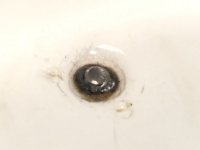
View attachment 48709 View attachment 48710 View attachment 48711 View attachment 48712

Any ideas? How do I get these things out? Or in?

I just did this. what I did was use a sharp screwdriver to remove the flange that surrounds the remaining bolt. worked my way under the flange with the edge of the screwdriver point, pried it up, and once I got an edge pried up, worked my way around that flange twisting the screwdriver to get it all pried up. it's pretty brittle, and once I got the edge up, it was pretty easy to use the whole screwdriver point to lever the flange up and break it off, and the bolt fell into the hole and I was done. took 5 minutes. you say you think the previous installer applied gunk to the threads to get them to hold. It may be just corrosion (urine related corrosion is pretty ugly), and if you use a mild acid and let it set awhile, then brush it off, it may expose the flange so you can do what I did. hope this helps someone.
 
Back
Top